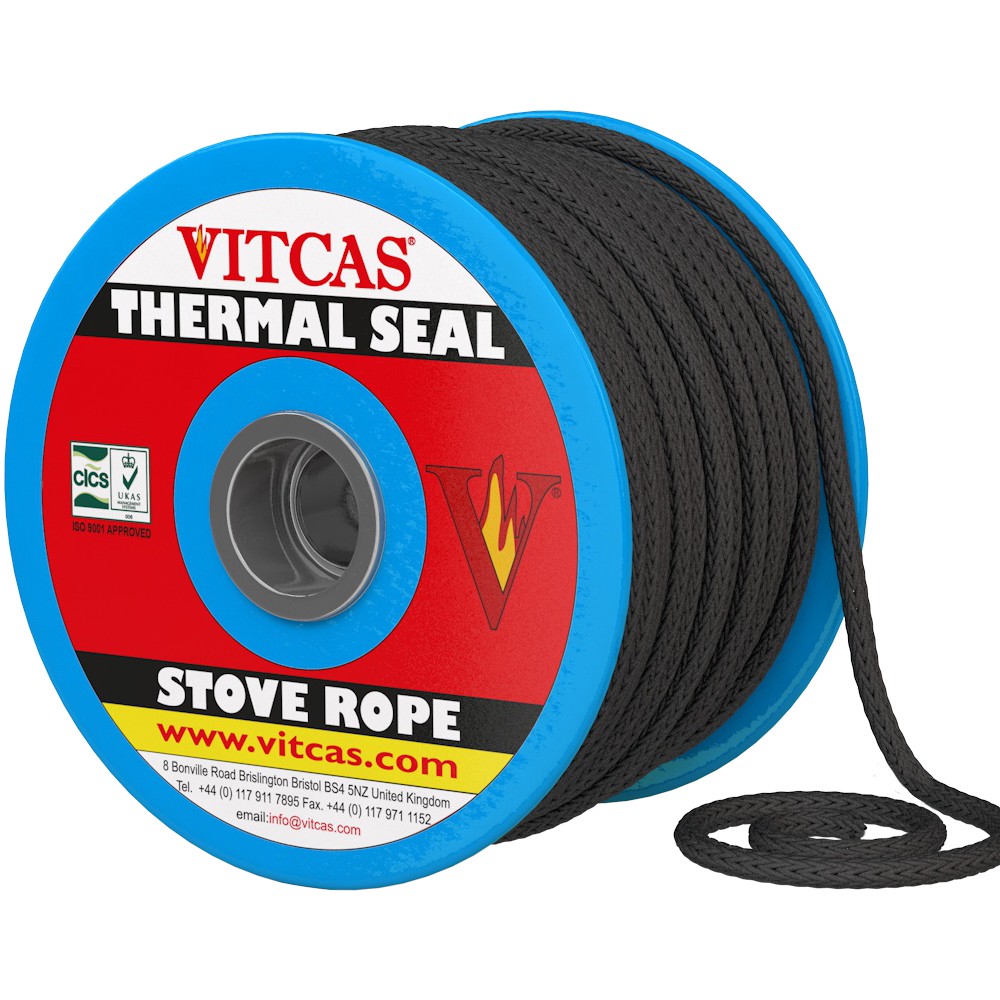
When the stove door does not close as it did before, replacing the rope does not always solve the entire cause. A similar symptom may result from material wear, its seating, or the condition of the mechanism. Start the evaluation on a cold device, following the requirements of the specific model.
Compare the entire perimeter of the door
Check the wear, corners, and joint of the ends. Mark the spot where the rope comes away or clearly changes profile. For black Vitcas stove rope, the variant should correspond to the groove and the intended compression, not just visually resemble the previous section.
Check the seating surface and remnants of old glue. If the material is loose over a short section, determine the condition of the substrate before making a repair. Bonding it to a weak residue may leave the same cause for local detachment.
Assess the mechanism separately
Compare the position of the frame, hinges, and lock according to the instructions. Do not inadvertently increase the force of the handle to compensate for a new, thicker seal. The material format should not change the way the door operates outside the intended range.
Rope adhesive has specific applications and preparation. Choose it after identifying the substrate and material. Adjustment or repair of the mechanism, if needed, remains a separate task and must comply with the device documentation.
Select the scope of replacement first
White rope and glue kit facilitates purchasing compatible materials, but still requires the correct variant. During a full replacement, record the length, routing, and endpoint. Allow the required setting stages before reheating.
After preparation, check the closure without forcing. Mechanical inspection alone does not constitute a complete device leakage test. Recording the diagnosis and replaced parts allows distinguishing recurring rope wear from door setting changes during the next inspection.